


Microlearning has established itself as one of the most influential trends in digital education, especially for children. The idea is both simple and powerful: to deliver short, focused learning experiences that fit naturally into everyday routines, without requiring long study sessions or sustained concentration. In a fast-paced, distraction-heavy world, small units of knowledge seem like the perfect solution. However, not all short content results in truly effective microlearning.
Across many educational platforms, activities are divided into smaller parts, yet the underlying mechanic remains exactly the same from beginning to end. The lesson changes, the text changes, the question changes — but the experience stays identical. Over time, this repetition wears learners down. The first few minutes may feel engaging, but the sense of novelty quickly fades. The apparent variety is superficial, because the brain rapidly recognizes the repeated structure and shifts into autopilot mode. Interaction continues, but engagement declines.

This distinction is essential: varying content is not the same as varying experience. A quiz can contain hundreds of different questions and still feel monotonous. In contrast, a simple microgame can generate a completely different experience each time, even when it reuses the same visual setting — as long as the challenge, elements, and possible outcomes change. What sustains attention is not only what is learned, but how the learner interacts with the learning process.
A clear example of this can be seen in ArieToy’s microgames. Miss-Pic, inspired by classic arcade mechanics, always uses the same set of levels, yet never delivers the same session twice. Emojis, words, and their letters constantly change, and the interaction between the mouse and the cat creates new situations in every round. The word search game follows the same logic: its structure is fixed, but the experience transforms with each new combination. These small variations continuously refresh the challenge, which is critical for effective microlearning.
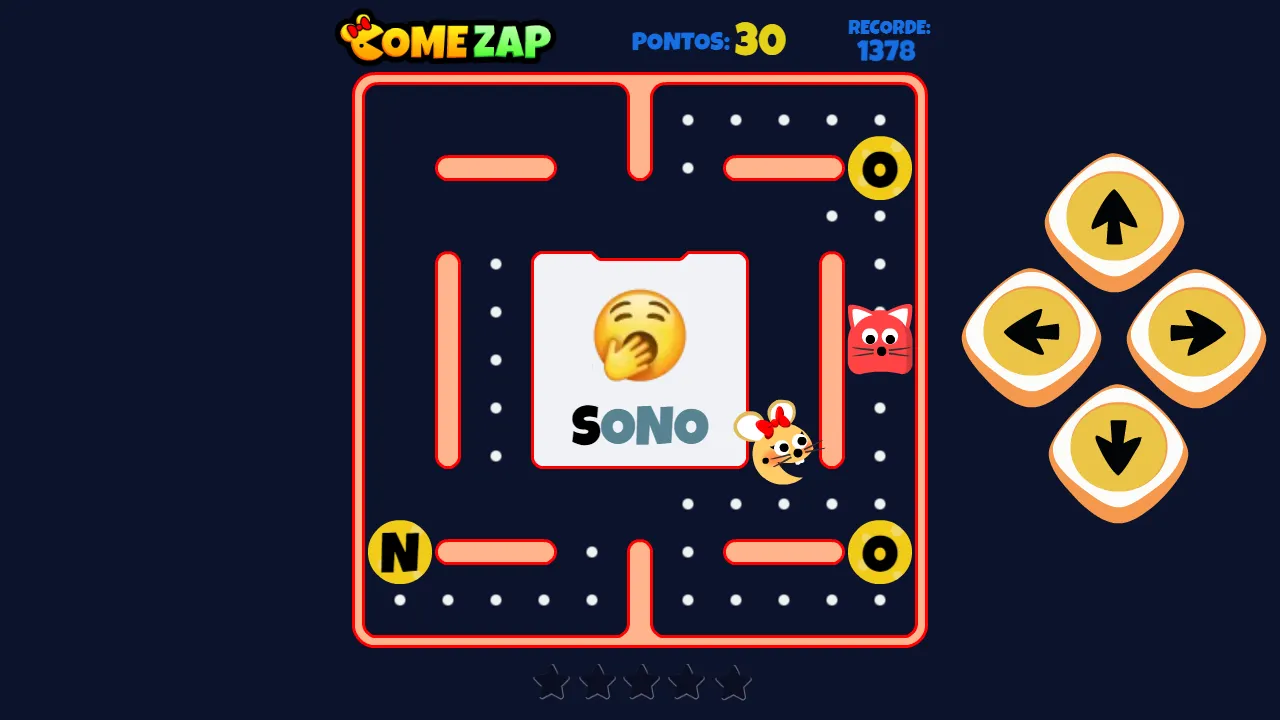
This approach contrasts sharply with more traditional practices, where microlearning simply means “large content divided into smaller chunks.” In ArieToy’s short games, each experience has its own identity. They conclude quickly, but they have rhythm, personality, and moments of surprise. They are not just exercises; they are micro-events — experiences that children remember, repeat, and explore.
Even the comic strips follow the same philosophy. They are extremely short, with only a few panels and minimal text, yet each one delivers a complete mini-story, with humor, context, and character. They are not fragments of a larger narrative, but self-contained experiences that are easy to read and easy to share. This makes them a natural fit for microlearning, offering a full experience in a matter of seconds.
By combining speed with variation, microlearning becomes more dynamic and less mechanical. It works when it keeps the brain alert, curious, and active. Short games with evolving dynamics, comics with micro-stories, and activities that conclude quickly form a balanced ecosystem — one that captures the strengths of microlearning without falling into the trap of monotony. This is precisely the approach that sets ArieToy apart within the landscape of digital educational content.
Scientific references
Thompson, R. F., & Spencer, W. A. (1966). Habituation: A model phenomenon for the study of neuronal substrates of behavior. Psychological Review.
Csikszentmihalyi, M. (1990). Flow: The Psychology of Optimal Experience.
Deci, E. L., & Ryan, R. M. (2000). The "what" and "why" of goal pursuits: Human needs and the self-determination of behavior. Psychological Inquiry.
Systematic review on microlearning design and learner engagement. Education Sciences (MDPI).
 Português